
WELCOME BONUS 300%
UP TO €2000 + 100
FREE SPINS
UP TO €2000 + 100
FREE SPINS
Home → Games
Casino games at OxiBet
Corner Pays 8:1, Dozen Only 2:1
A corner bet covers four adjacent numbers and pays 8:1, while a dozen bet covers twelve numbers and pays only 2:1. The house edge stays identical on both, because the payout ratio scales with the number of pockets covered. On the American wheel, 38 pockets carry a house edge of 5.26%, so a €10 corner returns €80 on a win and a €10 dozen returns €20.
The same corner on the European wheel pays 8:1 as well, but 37 pockets lower the house edge to 2.70%. Over 100 rounds at €10 a round, that difference costs €2.70 on the European layout against €5.26 on the American one. A dozen at 2:1 covers twelve pockets and wins roughly once in three spins, so the payout looks small next to the stake.
The five number bet on the American wheel is the exception, paying 6:1 for five pockets and producing a house edge of 7.89%. That is the only bet above 5.26% on that layout, and no equivalent exists on the European wheel. A €10 five number bet therefore returns €60 on a win but loses €0.79 per €10 staked over the long run.
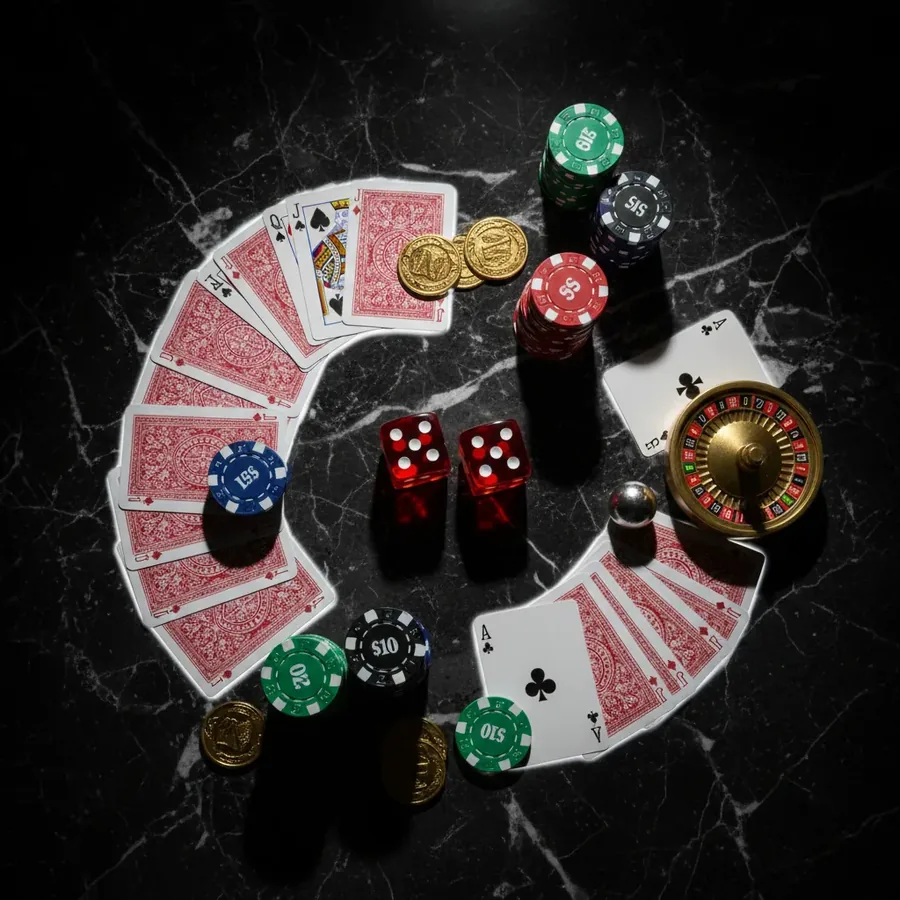
Hold or Discard: Deciding on Five Cards
Jacks or Better 9/6 pays 9 for a full house and 6 for a flush per coin, with an RTP of 99.54% and a house edge of 0.46%. The royal flush pays 800 per coin, but the 4,000-coin jackpot requires the maximum bet of five coins. Discarding the wrong card from a dealt flush therefore costs more than the flush itself pays.
The short pay version, Jacks or Better 8/5, drops the full house to 8 and the flush to 5, and the RTP falls to 97.29%. That two-unit cut costs 2.25 percentage points against 9/6. On a €1 coin at 600 hands an hour, the difference is roughly €13.50 an hour in expected loss between the two pay tables.
Deuces Wild full pay goes the other way, with an RTP of 100.76% and a house edge of −0.76% for the player. All four deuces are wild, and the pay table runs 25/15/9/5/3/2/2/1. The smallest deviation from optimal strategy pushes the RTP below 100%, so the hold decision on every draw matters more than the pay table itself.
A Bankroll for 200 Rounds at 1 EUR
Baccarat Banker with eight decks and a 5% commission carries an RTP of 98.94% and a house edge of 1.06%. The commission reduces the payout to 0.95:1, which offsets the Banker's positional advantage when the third card is drawn. At €1 a round over 200 rounds, €200 of stakes costs about €2.12 on average, so a bankroll of €50 covers the swings in most sessions.
Craps Pass Line sits at an RTP of 98.59% and a house edge of 1.41% per resolved bet, or 0.42% per roll. The Come bet has identical maths. Two hundred resolved €1 bets therefore cost about €2.82, close to the Banker figure but with a standard deviation of 1.00, which means the balance moves more sharply round to round.
Roulette American is the expensive option, with 38 pockets, an RTP of 94.74% and a house edge of 5.26%. Two hundred €1 spins cost roughly €10.52 on average, five times the Craps figure. The five number bet is worse still at 7.89%, so €200 staked there loses about €15.78. A 300% welcome bonus up to €2,000 plus 100 free spins changes the opening balance but not these per-round costs.
When Does Splitting Aces and Eights Make Sense?
Splitting aces usually gives one card to each hand, and resplitting aces improves the RTP by 0.08 percentage points. Doubling after a split adds about 0.14 percentage points, while the dealer hitting soft 17 lowers the RTP by 0.22 percentage points. Those three rule modifiers together swing the house edge by roughly 0.44 percentage points on the same six-deck shoe.
Liberal Vegas Strip rules with S17, DAS, resplit and late surrender produce an RTP of 99.72% and a house edge of 0.28%, the most player-friendly set in the comparison. A blackjack pays 3:2 there. Splitting eights against a dealer 10 is standard basic strategy, and the split itself can run to four hands.
Insurance is the bet to decline, with an RTP of 92.53% and a house edge of 7.47% on six to eight decks. Basic strategy always refuses it except for card counters at a true count of +3 or higher. A single deck lowers that edge to about 5.88%, but the insurance bet remains worse than the main hand in every deck count.
6 Decks vs 8 Decks: The House Edge Difference
Moving from eight decks to six improves the RTP by about 0.02 percentage points, a small gain next to the other rule choices. The 6:5 blackjack payout is the real cost: replacing 3:2 with 6:5 adds 1.39 percentage points to the house edge on six decks, taking the RTP to 98.15%. On a €10 bet a blackjack pays €12 instead of €15.
Single deck classic rules with a 3:2 payout reach an RTP of 99.85% and a house edge of 0.15%. One deck is about 0.48 percentage points better than eight decks, but that advantage is often cancelled by a 6:5 payout. A single deck also drops the insurance edge to roughly 5.88% from 7.47% on six to eight decks.
Liberal Vegas Strip rules at 99.72% RTP show what the friendly rule set is worth: S17, DAS, resplit and late surrender together. The H17 rule alone costs 0.22 percentage points, more than ten times the deck-count effect of 0.02 percentage points. Deck count matters, but the payout on a natural and the dealer's soft 17 rule matter far more.
Game categories at a glance
| Category | Examples | Stakes From | Highlight |
|---|---|---|---|
| Slots | Cygnus 4, Rise of Olympus, Money Train 2 | 0.10 EUR | thousands of titles |
| Table games | Roulette, Blackjack, Baccarat | 0.50 EUR | classic rules |
| Live casino | Sweet Bonanza CandyLand, Mega Roulette | 0.20 EUR | real dealers |
| Jackpot games | Mega Moolah, Divine Fortune, Age of the Gods | 0.20 EUR | progressive pools |
| Instant games | Aviator, Plinko, Mines | 0.10 EUR | fast rounds |
| Video poker | Jacks or Better, Deuces Wild | 0.25 EUR | strategy based |
Punto Banco: 5% Commission on Banker Wins
The Banker bet in eight-deck Punto Banco carries an RTP of 98.94 percent and a house edge of 1.06 percent, with a 5 percent commission charged on winning Banker wagers. That commission reduces the effective payout to 0.95 to 1, so a €100 Banker win returns €95 in profit. The commission offsets the Banker's positional advantage when the third card is drawn, and the result is the strongest main bet in the game.
Compared with the Tie bet at 8 to 1, which has an RTP of 85.64 percent and a house edge of 14.36 percent, the Banker bet keeps far more of each euro staked. On €100 of Banker stakes the average cost is €1.06, while the same amount on Tie costs €14.36. The gap between the two is roughly thirteen and a half times the edge.
Among the main Baccarat bets, Banker at 1.06 percent sits below the Tie bet at 14.36 percent, and the gap widens further against the Player Pair and Banker Pair side bets, which carry a 10.36 percent edge. A side bet is an optional extra wager placed alongside the main bet. On a tie result, Banker and Player stakes are returned as a push, so the round costs nothing beyond the stake itself.
The Craps Pass Line in Four Steps
A Pass Line bet in Craps returns an RTP of 98.59 percent and carries a house edge of 1.41 percent per resolved bet, with a standard deviation of 1.00. The equivalent Come bet has identical maths. Per roll, the edge works out to 0.42 percent, which is the figure a player faces on each individual toss rather than across the whole hand.
The process runs in four steps. First, the shooter places the come-out roll, and a 7 or 11 wins at 1 to 1 while 2, 3 or 12 loses. Second, any other total becomes the point. Third, the shooter keeps rolling until the point repeats or a 7 appears. Fourth, hitting the point pays 1 to 1, while a 7 before the point loses the bet.
On €100 of Pass Line stakes, the average cost is €1.41 per resolved bet, and the same figure applies to the Come bet. Compare that with the American Roulette five-number bet, which carries a 7.89 percent edge, or the Tie bet in Baccarat at 14.36 percent. A side bet placed alongside the Pass Line is a separate wager and does not change the 1.41 percent edge on the main line itself.
The 9/6 Paytable: Nine for a Full House, Six for a Flush
In Video Poker Jacks or Better 9/6, the Full House pays 9 and the Flush pays 6 per 1 coin, giving an RTP of 99.54 percent with optimal strategy and a house edge of 0.46 percent. The Royal Flush pays 800 on a single coin, or 4,000 when the maximum bet of 5 coins is placed. Standard deviation sits at 4.42.
Cutting the Full House to 8 and the Flush to 5 in the 8/5 short pay table drops the RTP to 97.29 percent, a loss of 2.25 percentage points against 9/6. Intermediate values show the same slide: 9/5 returns 98.45 percent, 8/6 returns 98.39 percent, 7/5 returns 96.15 percent, and 6/5 returns 94.99 percent. Two payout units cost the player more than two points of RTP.
On €100 of stakes at 9/6, the average cost is €0.46, while the same €100 at 8/5 costs €2.71. The Royal Flush bonus of 4,000 only applies when the maximum bet of 5 coins is placed; a smaller stake scales the payout down to the 800 figure. The pay table on the machine, not the game name alone, sets the figure the player actually faces.
Before Doubling Down: Read the Dealer's Upcard
In Blackjack, the dealer hitting soft 17 lowers RTP by 0.22 percentage points, so a rule set with H17 carries a larger house edge than one without it. Doubling after a split improves RTP by about 0.14 percentage points, and resplitting aces improves it by 0.08 percentage points. Six decks instead of eight adds about 0.02 percentage points.
Before doubling down, the open dealer card is the deciding input. A double doubles the stake with one card, and a split creates up to four hands, with split aces usually receiving one card each. Insurance is offered as a separate side bet of up to 50 percent of the main bet when the dealer shows an ace, pays 2 to 1, and carries an RTP of 92.53 percent with a 7.47 percent edge.
Basic strategy always declines insurance except for card counters at a true count of +3 or higher. The Liberal Vegas Strip rule set, combining S17, DAS, resplit and late surrender, reaches 99.72 percent RTP with a 0.28 percent edge. Replacing a 3 to 2 blackjack payout with 6 to 5 adds 1.39 percentage points to the casino's edge, so on a €10 bet a blackjack pays €12 instead of €15. Single-deck classic rules with 3 to 2 reach 99.85 percent RTP and a 0.15 percent edge.
Roulette Wheels: 37 vs 38 Pockets
The French wheel carries 37 pockets numbered 1 to 36 plus a single zero, while the American wheel adds the double zero for 38 pockets. That single extra pocket is the entire structural difference between the two layouts, and the payouts on the two wheels are otherwise identical. On a straight number the payout stays at 35:1 either way, so the same winning chip returns the same money regardless of which wheel produced it.
Because the payout schedule does not change when the pocket count does, the house edge absorbs the whole difference. The French wheel keeps 2.70% of stakes on inside bets without La Partage, and the American wheel keeps 5.26%. Doubling the zero count therefore doubles the casino's share, which is the only place where the two wheels visibly diverge for a player.
Over 100 € of inside stakes the French wheel costs 2.70 € on average and the American wheel costs 5.26 €, a gap of 2.56 € per 100 € wagered. A player who runs 1,000 € through the American wheel gives up roughly 52.60 € against 27.00 € on the French version. The split, street, corner and six line bets all carry the same 35:1, 17:1, 11:1, 8:1 and 5:1 payouts on both wheels.
American Roulette: 5.26% Because of the Double Zero
American Roulette runs on 38 pockets covering 1 to 36 plus the zero and the double zero, and the extra pocket lifts the house edge to 5.26% against 2.70% on the 37 pocket French wheel. The payout schedule is unchanged from the European layout, so a straight number still pays 35:1, a split 17:1 and a street 11:1. The double zero therefore adds cost without adding return.
The Five Number Bet covering 0, 00, 1, 2 and 3 is the worst option on the American wheel. It returns an RTP of 92.11% and a house edge of 7.89%, the only wager on this wheel above the 5.26% baseline, and it pays 6:1 while covering 5 of the 38 pockets. No equivalent bet exists on the European wheel.
Staking 100 € on the American wheel costs 5.26 € on average, so 1,000 € of play gives up about 52.60 €, roughly double the 27.00 € the French wheel would take across the same turnover. A player who spends 500 € on red or black at 1:1 loses about 26.30 € at the 5.26% edge, whereas the same 500 € on the French wheel costs about 13.50 €.
Three Roulette Variants and Their House Edges
American Roulette holds a 5.26% house edge on its 38 pockets, French Roulette with inside bets sits at 2.70% on 37 pockets, and the Five Number Bet on the American wheel reaches 7.89% RTP 92.11%. Those three figures describe the same family of games under three different pocket counts and bet selections. The payouts on straight, split, street, corner, six line, dozen and column bets stay identical across the European and American layouts.
Converting the edges to money makes the ranking clear. A 100 € straight bet costs 5.26 € on the American wheel and 2.70 € on the French wheel, a difference of 2.56 € per 100 € staked, while the same 100 € placed on the Five Number Bet costs 7.89 €. Over 1,000 € of turnover the American wheel takes about 52.60 €, the French wheel about 27.00 € and the Five Number Bet about 78.90 €.
The Five Number Bet is the only American wager above the 5.26% baseline, and it pays 6:1 while covering 5 of the 38 pockets. The French wheel without La Partage on inside bets keeps the full 2.70% edge rather than reducing it further, so the inside straight, split, street, corner and six line bets all sit at that level. La Partage applies elsewhere on the French layout, not to these inside wagers.
A 2.70% House Edge: 2.70 EUR per 100 EUR
A house edge of 2.70% means the casino keeps 2.70 € of every 100 € staked on French Roulette inside bets over the long run. That figure applies to the 37 pocket wheel when La Partage does not cover the inside wagers, so straight, split, street, corner and six line bets all sit at 2.70%. The payout schedule remains 35:1, 17:1, 11:1, 8:1 and 5:1 respectively.
Across 1,000 € of inside turnover the expected cost is about 27.00 €, and across 10,000 € it reaches roughly 270.00 €. Compare that with the American wheel at 5.26%, where the same 10,000 € of turnover costs about 526.00 €, or the Five Number Bet at 7.89% and its 789.00 € on 10,000 €. The 2.70% level is therefore the middle of the three figures.
The edge is a theoretical long-run average over hundreds of thousands of spins, so it does not forecast any single session. A player running 500 € through French inside bets faces an average cost of 13.50 €, while the same 500 € on the American wheel costs about 26.30 €. The 2.70% figure also matches the French wheel's RTP of 97.30%, which together add to 100%.
Contact
Live - online chat
Banking









Providers












OxiBet 2026